The Christian Monopoly on Spirituality
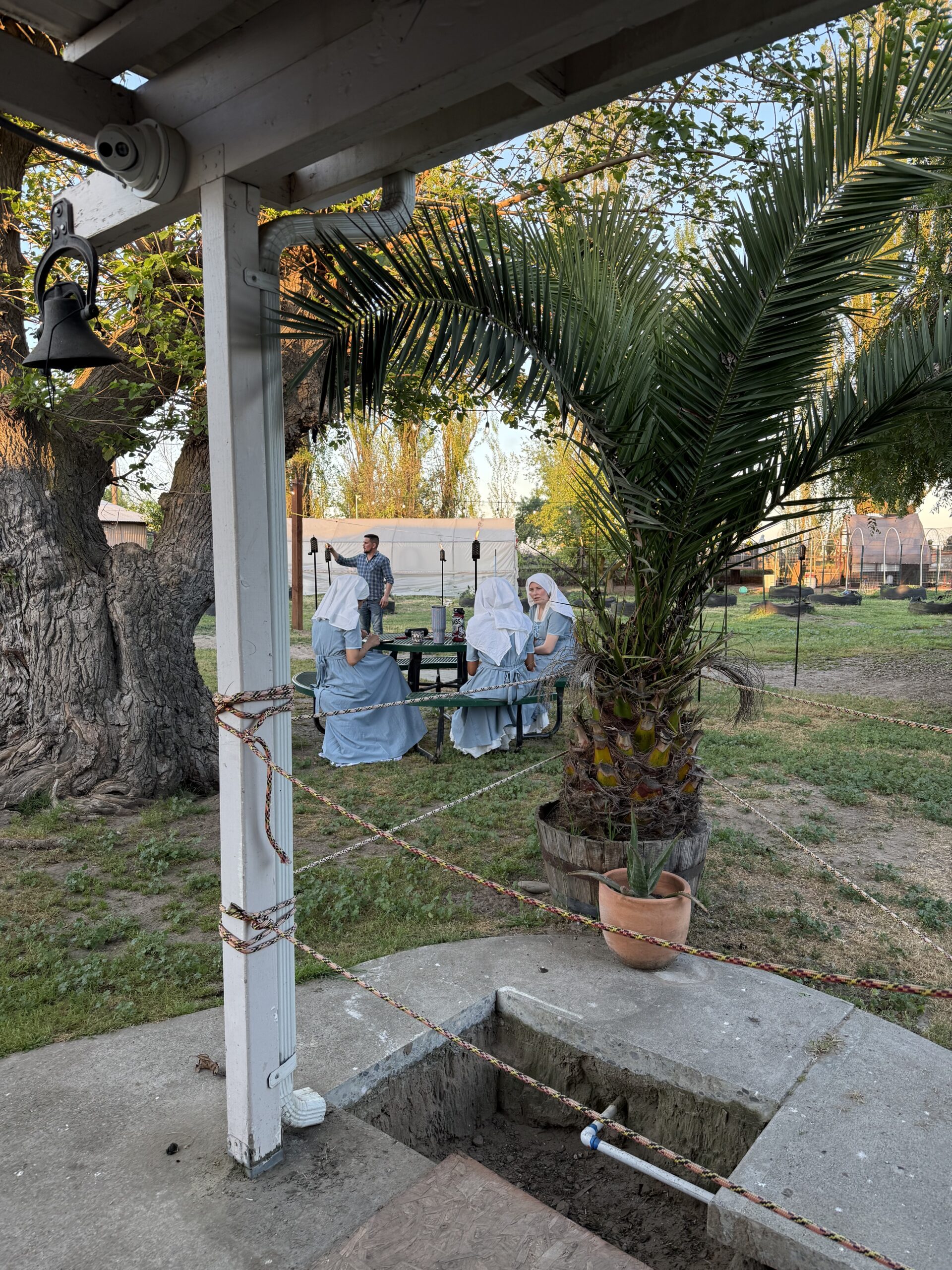
Traders Moon Ceremony November 2017
The church became dominant in Europe following the fall of the Roman Empire. The only religion recognized in Middle Ages Europe was Christianity and specifically Catholicism. Christianity in the middle ages dominated the lives of both peasants and the nobility. Religious institutors including the Church and the monasteries became wealthy and influential given the fact that the state allocated a significant budget for religious activities.
Gregory I the Great played a significant role in establishing a strong and influential papacy and church machinery. His first step in asserting the control of the papacy is elaborated by the fact that he sent monks to convert the Anglo-Saxons whom he considered pagan. Gregory established an early system in which the Church yielded as much power as the State and sometimes more . . .
Those who succeeded Gregory continued to expand the church’s influence in both the social and political aspects of the medieval society.
When the Roman Empire began to fall in the 5th century, Germanic barbarian tribes took over Rome. This triggered what is known in history as the Dark Ages, which saw the establishment of the Christian Catholic Church as the sole source of moral authority.
The term Catholic comes from the English term catholik, the old French term catholique and the Latin term catholicus, all of which mean universal. Throughout most of the medieval era, any religion outside of Christianity was considered heretical.
The Christian Church had its own lands, laws and taxes. The Church was so influential that it too collected taxes from its followers. The Church also accepted different types of gifts from nobility and anyone who was looking for divine favor. As the role of the Church grew, bishops, archbishops, and the pope bore great influence on the reigning kings in Europe.
In the Middle Ages the Church was not only influential in political matters but was also a source of knowledge. In England, Irish monasteries served as a reliable place for seeking education.
The peasants often sent their children to the schools established by the Church. Even though the education was meager, it allowed the selected students to pursue studies in religion, philosophy and Latin at the monasteries or in universities.

The Great Appeal of Christianity
Elaine H. Pagels, The Harrington Spear Paine Foundation
Professor of Religion, Princeton University (December 2, 2017, Cold Moon Ceremony)
We know that many came to Christianity at knife point, but also, many went willingly to Christianity, so what is that about? What did Christianity offer people back in the middle ages, that made them want to belong?
Experts say there are six contributing factors to the popularity of Christianity in the middle ages and before it grew big enough to commit atrocities that they could get away with.
- A new community
“Christ there is neither Jew nor Greek, neither male nor female, neither slave nor free. This is a sociological formula that defines a new community. Here is a community that invites you, which makes you an equal with all other members of that community. Which does not give you any disadvantages. On the contrary, it gives even the lowliest slave personal dignity and status. Moreover, the commandment of love is decisive. That is, the care for each other becomes very important. People are taken out of an isolation. If they are hungry, they know where to go. If they are sick, there is an elder who will lay on hands to them to heal them.” (Helmut Koester)
- Established Welfare Institutions
“we have a clear establishment of social service – everything from soup kitchens to money for the poor if they need it. We have the very important establishment of the institution of widows, because a widow in the Roman society who had lost her husband and did not have money of her own was at the very bottom of the social ladder. One of the first welfare institutions we find in the church was all the widows who were recognized as virgins of the church, considered particularly precious possessions of the church; they were paid by the church and therefore were rescued from utter poverty in most instances . . .
“Christianity really established a realm of mutual social support for the members that joined the church. And I think that this was probably in the long run an enormously important factor for the success of the Christian mission . . . One should not see the success of Christianity simply on the level of a great religious message; one has to see it also in the consistent and very well thought out establishment of institutions to serve the needs of the community.” (Helmut Koester)
- Massive Demographic Changes / the Need for a Sense of Belonging
“ . . . we have to realize that the Roman Empire itself was going through some massive demographic changes at this time . . . cities are growing but the population itself, at least within cities, was probably not growing easily. There are more people dying than are being born in most major cities. In other words, the old pagan aristocracy is shrinking, not growing. Where are they coming from, these new people in the cities? Probably they are immigrating from the countryside or moving from other countries, but then again that’s exactly what we hear about the Christians. They are on the move. They travel to the cities. They’re the new population along with a lot of other people, so I think from a kind of social perspective we have to see the growth of Christianity as a product of the changing face of the city life in the Roman world . . . . through this period of very turbulent times in the second and third century, the Christians now become a significant proportion of the leading citizens of some of the major cities of the Roman world.”
“With new immigrant groups, all of them trying to find their way into Roman society — to make it in the Roman world, to be a part of the mainstream, to march up the ladder of success — belonging is one of the key issues, and what I think the Christians offer probably as well or better than anybody else in the Roman world is a sense of belonging. To be part of the Christian community… to be part of the church, is to belong to a society of closely-knit friends, brothers and sisters and . . . it may be something as simple as that that spells the [basis] of the success of Christianity in the Roman world…. (L. Michael White)
- Human Appeal of Christianity
Wayne A. Meeks talks about the human appeal of Christianity: this new message, [this] rather improbable message that the Son of God has come to earth and been crucified, in human form, and risen from the dead … appealed to a lot of perfectly ordinary people, or so they appear to us, in such a way that they were willing to change their lives and to become initiated into a group which brought them only hostility, estrangement from their families and neighbors, and the possibility of persecution to the point of death.
- Christians on ‘Love’
“the gods of the ancient world, if you look at them, their images, if you read about them in the Iliad, and the poetry of Sophocles…, the gods looked like no one more than the aristocrats, the emperor and his court. They looked like the courtiers. But here is a religion which claims that God is made manifest in a peasant, probably a man who didn’t write, a man who came from the people, a man who was completely unimpressive in worldly terms and much more like the vast majority of people. And in this astonishingly unexpected place, this movement said, God is revealed to be with us. I think that’s a powerful statement in itself.”
“ . . . this religion is saying that every person, man, woman, child, slave, barbarian, no matter who, is made in the image of God and is therefore of enormous value in the eyes of God…. That is an extraordinary message. And it would have been enormous news to many people who never saw their lives having value.”
When we think about the appeal of this movement to many people, it is certainly clear that some were drawn by the way that this community would take care of people. For example, like other elements of the Jewish community, the followers of Jesus tended to feed the destitute, take care of people who were widowed so that they would not become prostitutes and orphans and so forth. That was a primary obligation of Jewish piety. And Jesus’ followers certainly understood that. We know that when people joined the Christian communities in Rome, for example, they would be buried. This is not something anyone could take for granted in the ancient world. And this society was one in which people took care of one another. So that is an enormous element of the appeal of this movement.

- Differing Degrees of Devotion
Christianity . . . appealed to people in several ways. First of all, it did have a very high moral standard that it set forth . . . (and) had an institution that provided material benefits but also had a whole sacramental system that offered to its practitioners, supposedly, repentance from sins and overcoming sin and overcoming death . . .
As the church developed, it allowed for different degrees of Christian devotion. So that if you wanted to give yourself up to a highly ascetic life and renounce practically everything, you would be much glorified for doing that, but you could be married and have a position in worldly life and have a family, career and so on and that was all right, too. So, Christianity could adjust itself to different types of people, just as it could adjust itself to the highest class of intellectuals but also adjust itself to common people whom the church writers always remind the theologians that Christ died for the lowly, as well as, for the educated.
Comparing Catholic to Jewish practices, the author wrote: Both groups meet at least once a week. Both groups have very articulate ethical norms. Both groups have a tremendous ethic of community charity. Both groups have revealed ethical patterns of behavior . . . No promiscuity. Don’t kill the kids. Don’t worship idols. Don’t go to whorehouses. This whole thing that serves to build up community and create a kind of support system.
Afterword by Sister Kate
If you look over these things that identify the Christians, you will see that we are not different from them. The problem we have with Christianity today, with Catholicism, in particular, today, is the same problem we have with our government. There is nothing wrong with their mission statements, nothing wrong with their goals and objectives, nothing even necessarily wrong with their structures. But they have both been corrupted.
What a democracy needs to thrive is a free press and a voting public; one of those has been thoroughly corrupted and the other is dying on the vine. Christianity has very honorable core principals. In fact, they are the same principals of the Sisters, if you consider it.
New community. We want a new community. We want a more compassionate way of living with each other and with Mother Earth.
- Established welfare institutions. We wish to grow our Beguine Revivalist movement to return to tribal members taking care of tribal members.
- We are in midst of massive demographic changes and we could have women here who are Syrian refugees tomorrow . . . we have so many displaced peoples now on planet earth. People from Napa Valley, from Puerto Rico, from Texas, from Florida, from anywhere hit with destruction. Those people need to belong to community to heal.
- Human appeal of the Jesus suffering story. The one thing that bonds all of us around the world, the one thing that all humans have in common is that at one time or another, we all experience suffering.
- Message of love and compassions / Christians were the original flower children / hippies
- Differing degrees of devotion. Sisters, Brothers, Children of the Beguine, Tribal members, so do we have that.
The problem is not with Christianity; it is with Christians not living their Christian beliefs. It is corruption of their vision and message.
We the Sisters of the Valley, are the new Christians. We are the new belief system that is sweeping the planet. We are the new community. We are intent on establishing welfare institutions from the taxes generated from legalizing cannabis and from the industries creating hemp products to replace plastics.
We are intent on helping women caught up and displaced from wars or domestic issues. We see Jesus energy in the people we heal. We see Jesus energy in those we work with and those we love. We use Jesus energy to establish our own standards. And we accept, in our tribe, the differing degrees of devotion. We are too like them to not love them. We cannot continue to hate them for their slaughters and ignore the good that was done. We cannot point to the witch burnings without pointing to the practices that our ancestors followed out of silly superstition. Was it Christianity? We must ask ourselves, or — was it men in power? Would women still be accused of witchcraft if another man’s religion had won the monopoly?
Our ancient Beguine mothers were scholars. And scholars take a scholarly view of such things. And so we must temper our opinions with knowledge. And we must realize that at least at the level of principles and intent, we are more like the Christians than unlike them.