Visions of Autonomy
by Lina Samuelsson, Thesis submitted, Stockholm University, March 2017
It was clear why the Beguines provided such a fruitful role model for the Sisters. Just like the Sisters, the Beguines did business: they did not root their existence on gifts and alms. Similarly, they prayed, prepared natural remedies, and engaged in protest against the suffering of the poor. And most important of all, these women decided over their own destinies. They were not wives succumbed to the whims of husbands nor nuns obliged to live lives restricted by a deeply patriarchal institution. The Beguines provided a screen print of an ancient past and allowed the Sisters to anchor their sisterhood in history.
But in many ways, the Beguines were also the conscious creation of an ancient history – a strategic historical construct which the women of the operation could use to legitimize their claims and create a counter-narrative to the popular sentiment of female obedience and subservience under men through-out the centuries.
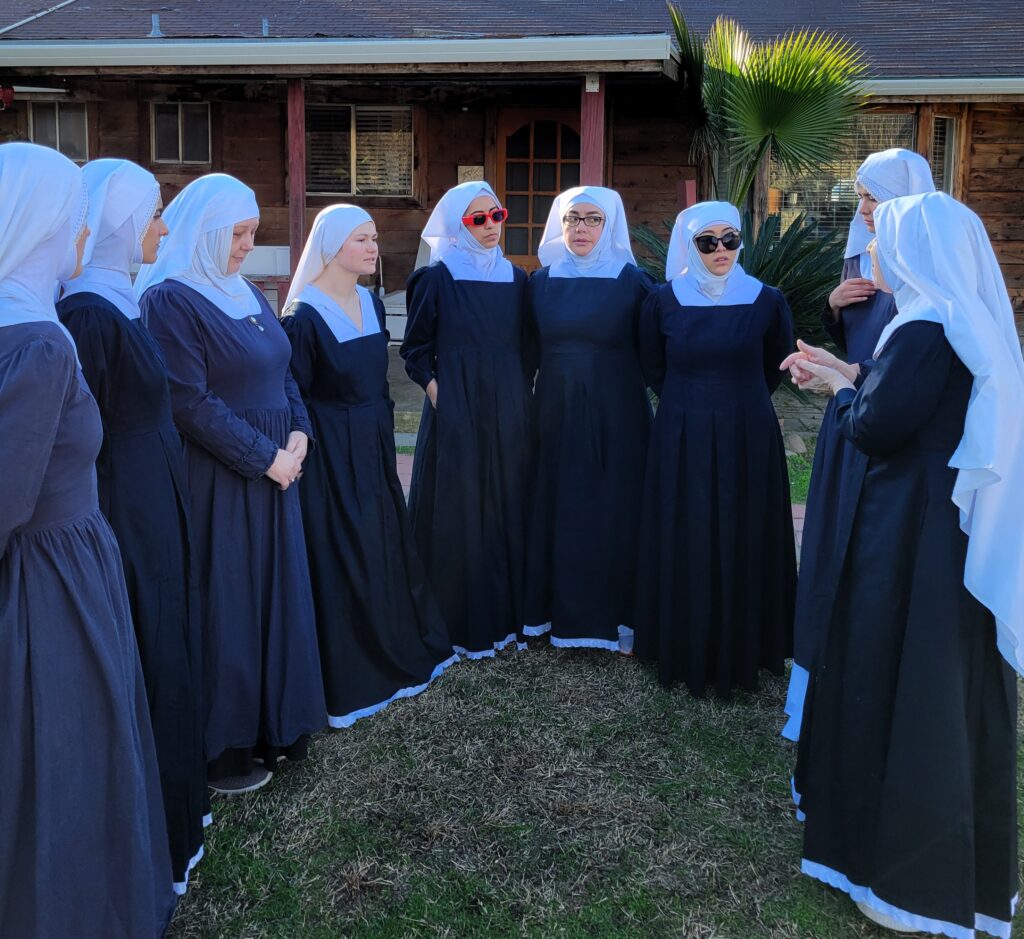
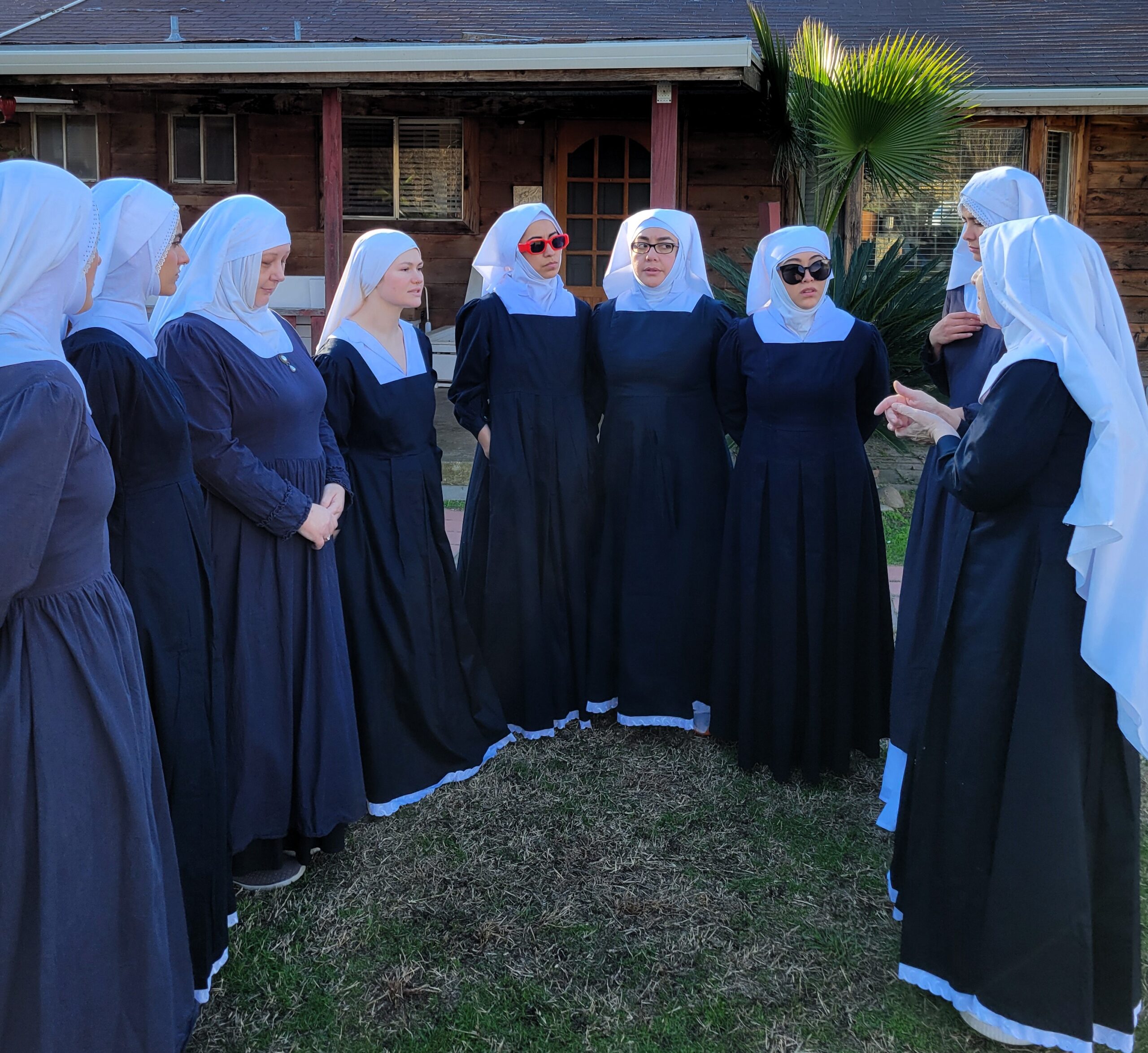
This is not to say that the Sisters recount of the history of the Beguines was in any way false; rather, that the resurrecting and highlighting of specific parts and pieces was a conscious move . . . to re-create a counter narrative and root their organization in time and space. In part, the construction of a connection between the largely unknown Beguines and the Sisters might have been a response to some . . . outrage at the Sister’s habit of dressing as nuns without being affiliated to a church. With the help of the Beguines, the Sisters of the Valley were no longer a freak occurrence but a natural prolongation of a largely forgotten history of emancipated nunnery.
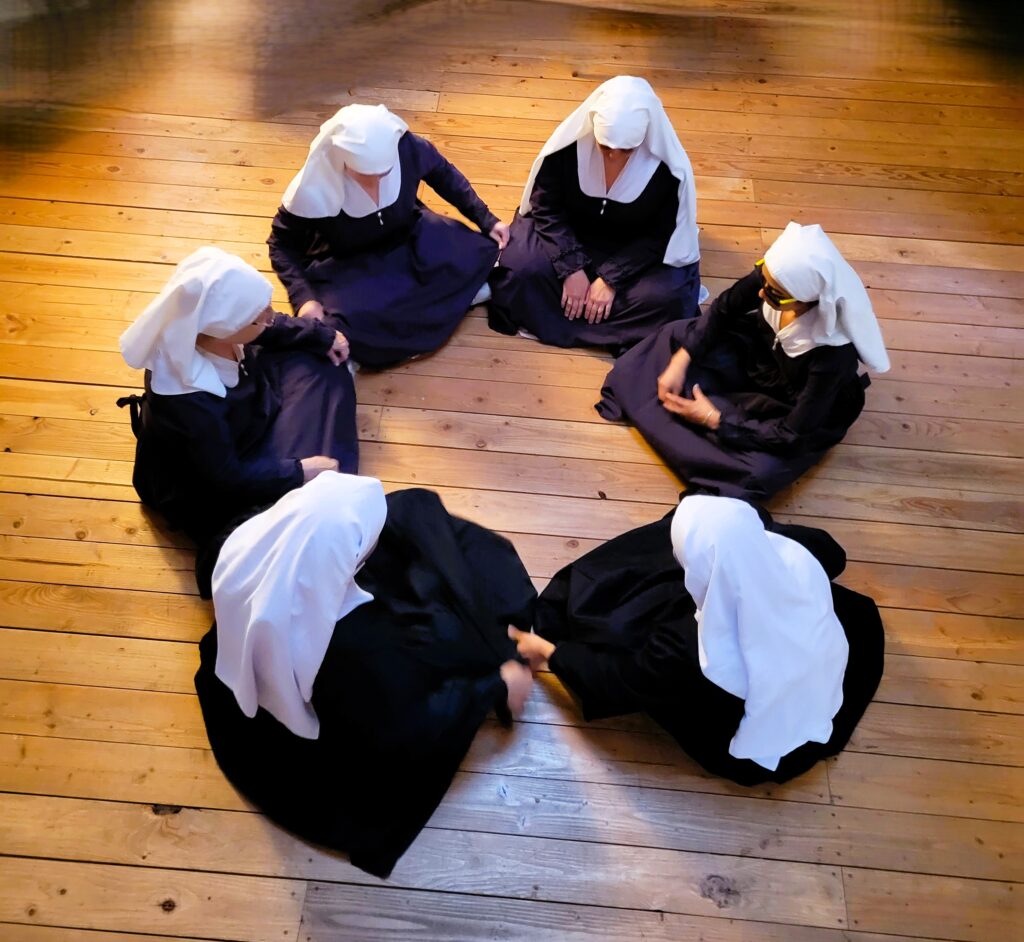
The organizational rules of the Sister’s – their medicine making, their spiritual practices, prayers and spells, their firm position on keeping a good ambience during work hours and outside of them, and their emphasis on resurrecting female oriented medical practices from pagan times put them in a position of close proximity to neo-pagan movements; so much so that I argue that they present a neo-pagan movement themselves. During the medieval ages, “witches” were executed in masses to satiate the churches coldhearted contempt for women; these women were believed to possess devilish powers. Between the late 15th to the middle of the 16th century, thousands of executions were carried out: perhaps even millions (Ehrenreich, 2010).
These women were accused of befriending the devil because of their propensity to possess lay medical knowledge, and for their knowledge of abortion and contraceptive techniques – all rendered “sins” by judges and priests of the medieval times. At the same time as the secular medical community, headed by male authorities, rose to prominence as a healing profession, women were killed in large numbers for their medical knowledge. About half of the women killed during these times were executed specifically for being so called “wise women”, as those “who know how to heal, know how to destroy” (Levack, 2006:147).
Lately, neopagan movements have been rising across the West. The reference to “paganism” is an attempt to reconnect to an age before female ways of knowing and working was violently executed — the age before the “wise woman” became the “witch”. Simultaneously as contemporary subcultures of neo-pagans are surfacing across the West like mushrooms in a mire, some Latin American women are reclaiming the legacy of la bruja – an archetype of a feared indigenous sorceresses who was shunned by colonial authorities. La bruja “symbolizes power outside of patriarchy’s control that potentially challenges a sexist status quo.
In Latin American subcultures, re-appropriation of la bruja has become a way to transverse masculine power plays and regain control from forces which sought to ostracize and exclude female authority. Similarly, in Western society, I argue that the neo-pagan and especially so the Wiccan movement presents a similar re-appropriation of the feared and unruly witch of medieval times, a way to re-claim power of interpretation from a long history of female oppression.
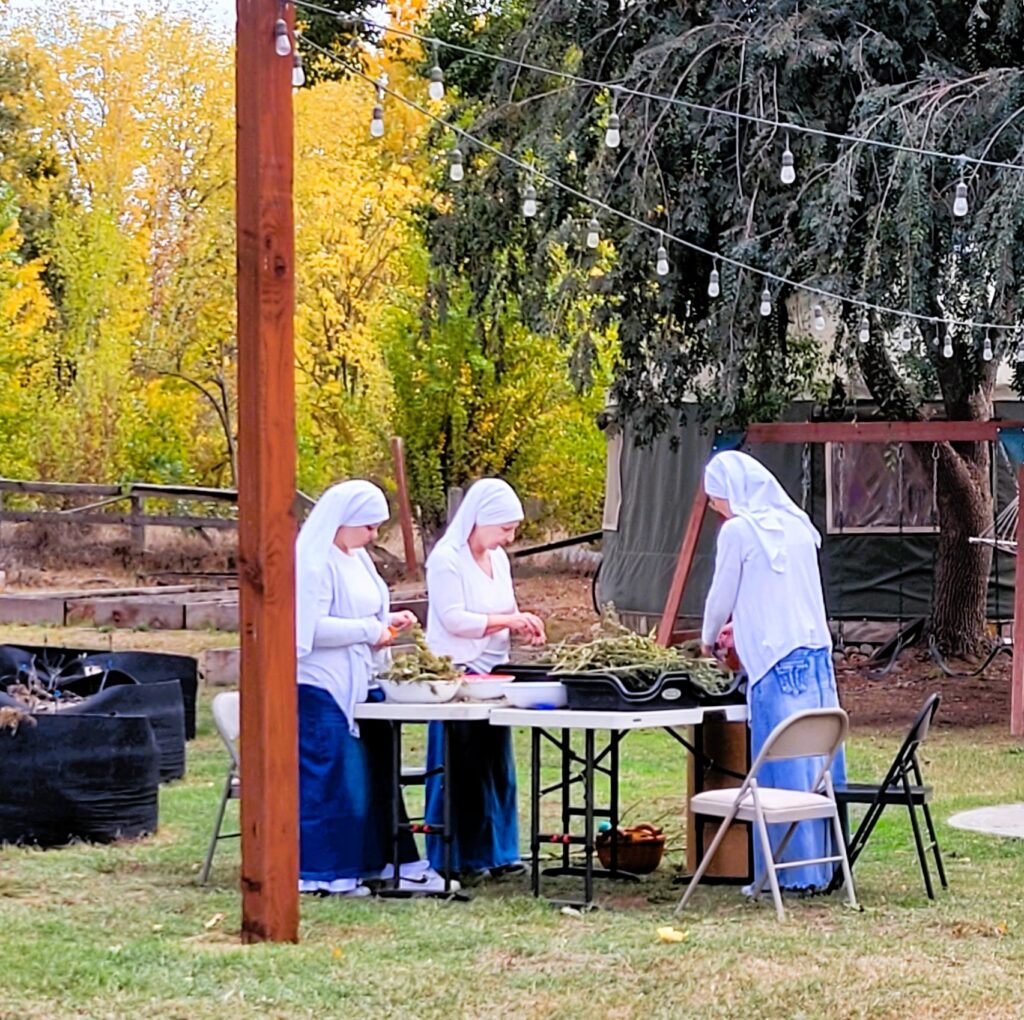
The Sisters do not explicitly label themselves nuns, Wiccans or witches, but I take the fact that they used Wiccan prayer songs in their ceremonies and a constant reminiscing of the ‘wise woman’ as evidence for striking similarities with other neo-pagan movements, who similarly lack normative sacred text and central (hierarchical) authority whilst giving, “. . . importance to individual choice and interpretation; re-shaping of ideas of the divine . . . original re-creation of myths and ritual — importance ascribed to ritual practice versus belief (and the) re-evaluation of magic . . .”
The essentialism of the Sisters is one that seeks to empower rather than diminish women, and as such celebrates the purportedly unique characteristics of women as a sex and a gender. Women were, as recalled, good at business, called upon to guard the feminine plant, and “wise” – wise in the sense of carrying an embodied knowledge which could be channeled both in communion with other women (or “sisters”) to act upon the world.