The Beguines as a Model for the Sisterhood
Sister Rosa’s Thesis
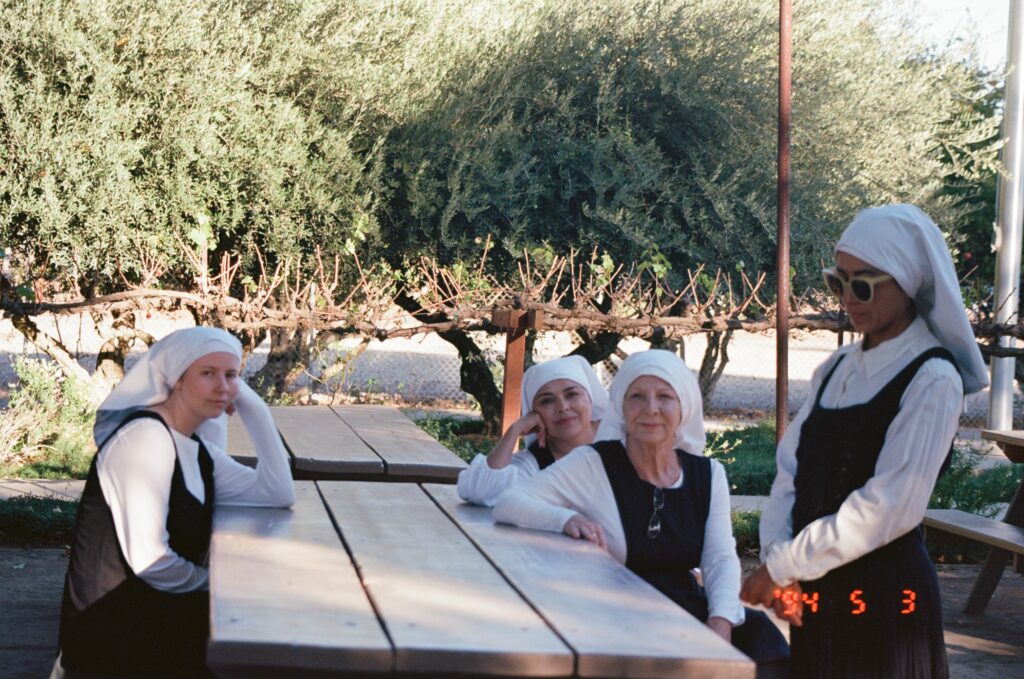
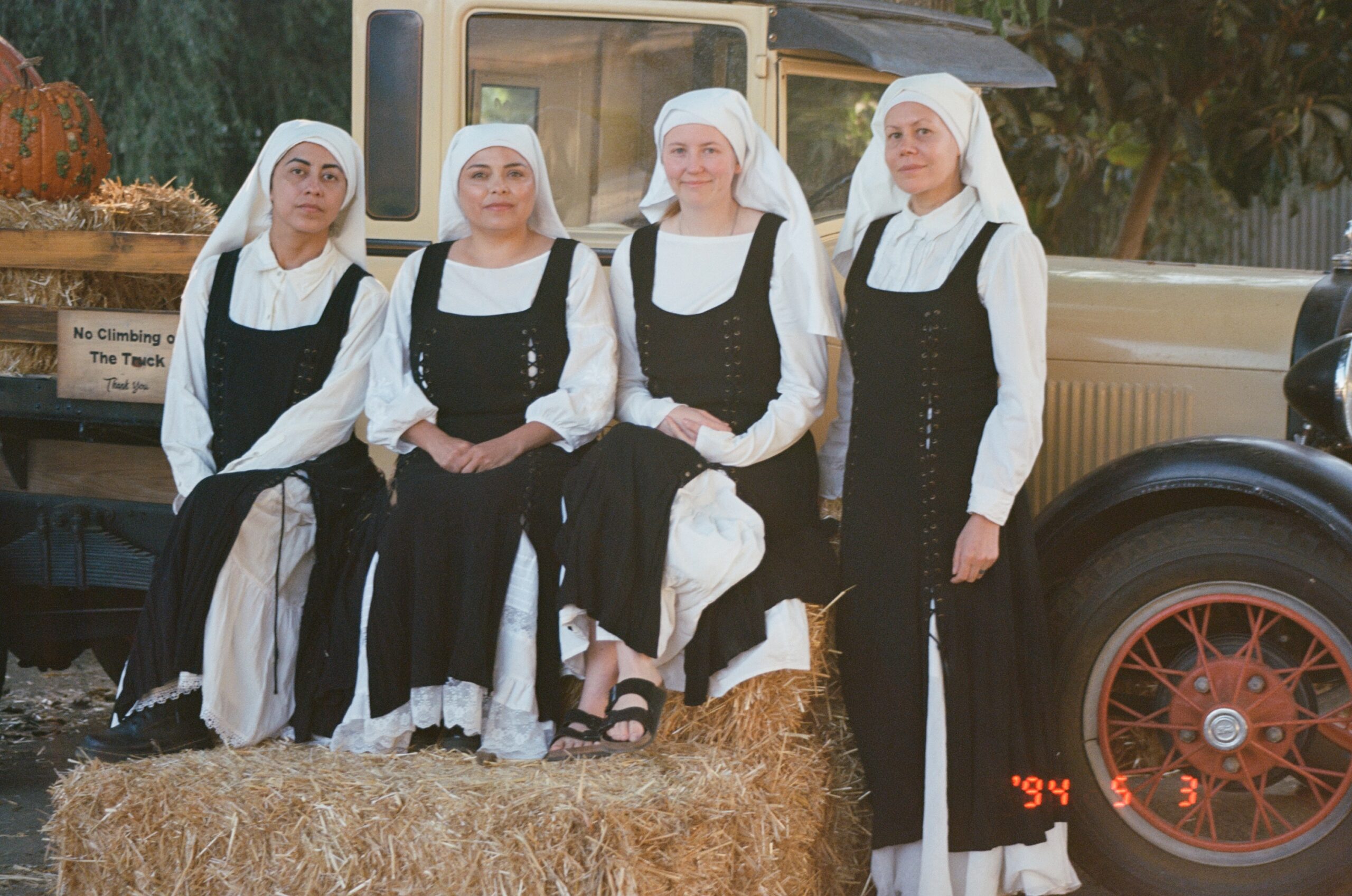
It was clear why the Beguines provided such a fruitful role model for the Sisters. Just like the Sisters, the Beguines did business: they did not root their existence on gifts and alms. Similarly, they prayed, prepared natural remedies, and engaged in protest against the suffering of the poor. And most important of all, these women decided over their own destinies. They were not wives succumbed to the whims of husbands nor nuns obliged to live lives restricted by a deeply patriarchal institution. The Beguines provided a screen print of an ancient past and allowed the Sisters to anchor their sisterhood in history.
But in many ways, the Beguines were also the conscious creation of an ancient history – a strategic historical construct which the women of the operation could use to legitimize their claims and create a counter-narrative to the popular sentiment of female obedience and subservience under men through-out the centuries.
This is not to say that the Sisters recount of the history of the Beguines was in any way false; rather, that the resurrecting and highlighting of specific parts and pieces was a conscious move . . . to re-create a counter narrative and root their organization in time and space. In part, the construction of a connection between the largely unknown Beguines and the Sisters might have been a response to some . . . outrage at the Sister’s habit of dressing as nuns without being affiliated to a church. With the help of the Beguines, the Sisters of the Valley were no longer a freak occurrence but a natural prolongation of a largely forgotten history of emancipated nunnery.
The organizational rules of the Sister’s – their medicine making, their spiritual practices, prayers and spells, their firm position on keeping a good ambience during work hours and outside of them, and their emphasis on resurrecting female oriented medical practices from pagan times put them in a position of close proximity to neo-pagan movements; so much so that I argue that they present a neo-pagan movement themselves. During the medieval ages, “witches” were executed in masses to satiate the churches coldhearted contempt for women; these women were believed to possess devilish powers. Between the late 15th to the middle of the 16th century, thousands of executions were carried out: perhaps even millions (Ehrenreich, 2010).
“Christianity really established a realm of mutual social support for the members that joined the church. And I think that this was probably in the long run an enormously important factor for the success of the Christian mission . . . One should not see the success of Christianity simply on the level of a great religious message; one has to see it also in the consistent and very well thought out establishment of institutions to serve the needs of the community.” (Helmut Koester)
Massive Demographic Changes / the Need for a Sense of Belonging
“ . . . we have to realize that the Roman Empire itself was going through some massive demographic changes at this time . . . cities are growing but the population itself, at least within cities, was probably not growing easily. There are more people dying than are being born in most major cities. In other words, the old pagan aristocracy is shrinking, not growing. Where are they coming from, these new people in the cities? Probably they are immigrating from the countryside or moving from other countries, but then again that’s exactly what we hear about the Christians. They are on the move. They travel to the cities. They’re the new population along with a lot of other people, so I think from a kind of social perspective we have to see the growth of Christianity as a product of the changing face of the city life in the Roman world . . . . through this period of very turbulent times in the second and third century, the Christians now become a significant proportion of the leading citizens of some of the major cities of the Roman world.”
Comparing Catholic to Jewish practices, the author wrote: Both groups meet at least once a week. Both groups have very articulate ethical norms. Both groups have a tremendous ethic of community charity. Both groups have revealed ethical patterns of behavior . . . No promiscuity. Don’t kill the kids. Don’t worship idols. Don’t go to whore-houses. This whole thing that serves to build up community and create a kind of support system.
Elaine H. Pagels, The Harrington Spear Paine Foundation
Professor of Religion, Princeton University