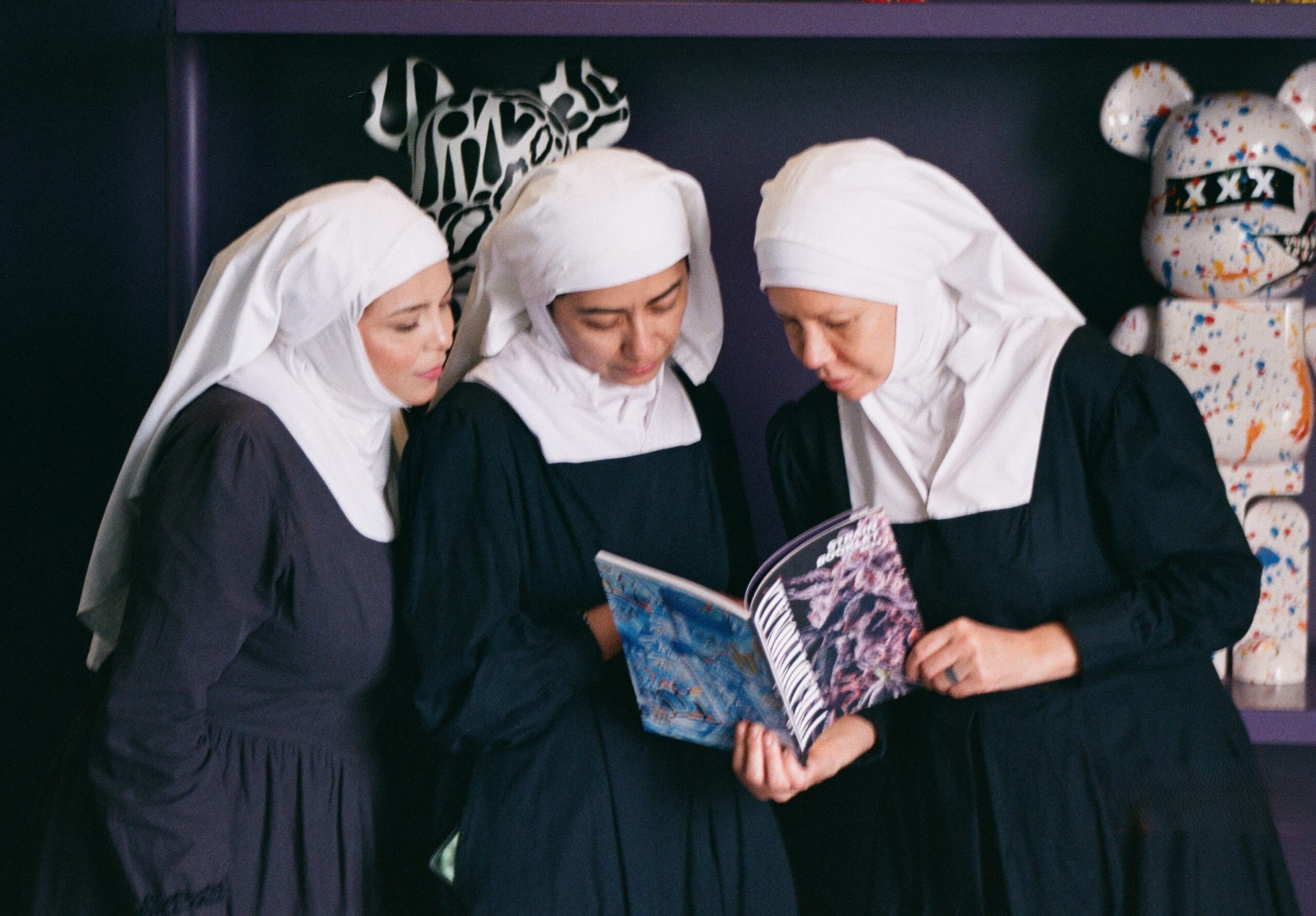
Beguine Revivalists
Introduction, Book of the New Beguines
The Beguines were single focused women, unaffiliated with a church, who served the people, and especially, the women, in castles across Europe during the middle ages. They provided housing and food security; they provided jobs and training and career paths. They grew hemp and made textiles.
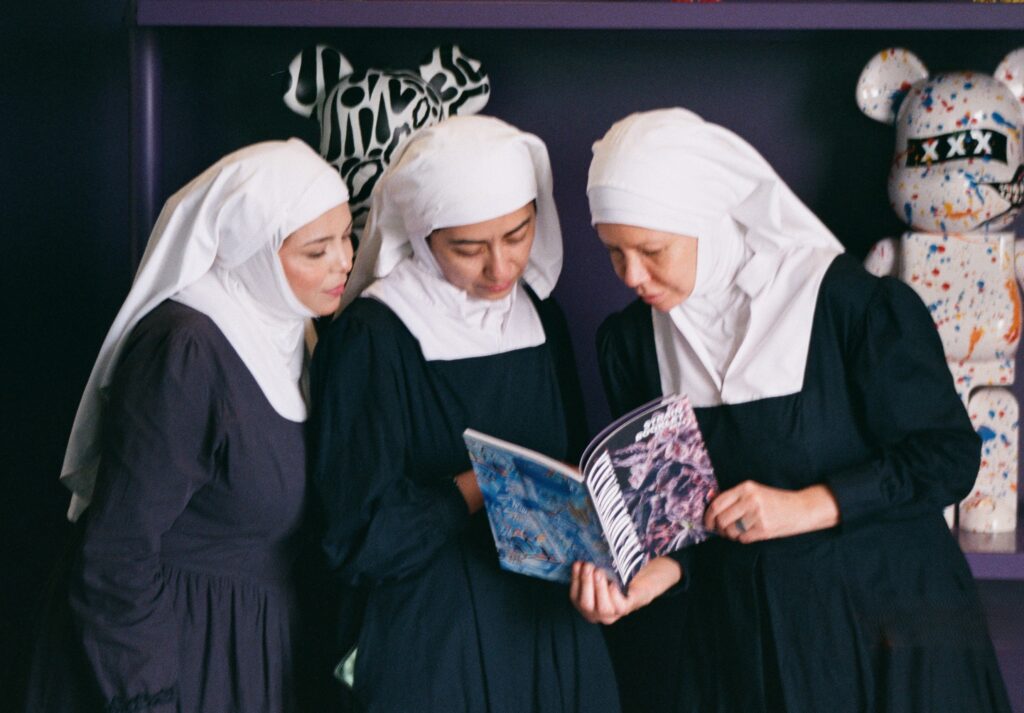
They wore similar clothes and colors that identified their enclave. At the height of their popularity, they had Bougienages across Europe. Before the inquisition, they were empowered and independent. After, they became Christian. The history books only reflect the records of Christian Beguines, but their history goes back pre-inquisition, pre-mainstream, and pre-coerced Christianity.
We hold no grudge against modern-day Christians (we have Christian sisters and brothers among us), except where their beliefs infringe on those of others. There will be more on this subject later.
Our Beguine foremothers were spiritual, but not religious. They lived together in private, but clustered housing. They worked together. They prayed together. They did not take vows. They were, I believe, the pattern after which Saint Scholastica founded her order of Catholic nuns.
The Beguines were persecuted throughout history, largely, say the history books, because they were so admired for the good work they did. Their medicines and soaps and textiles were highly sought after. People came from far to purchase from them. Every castle, at one time in history, had a Beguine enclave.
They were activists. I imagine that our Beguine mothers felt about white-man medicine, like ‘letting blood by applying leeches’ as we, today, look upon chemotherapy. They were champions for the people, and they supported themselves through their own toil. They wore similar clothing to announce to the public who they were, wherever they went; their gowns and modesty announced to all that they worked with the earth and the colors reflected their enclave.
We are a cross-over of the Beguine ancestors and the Catholic nuns, because the concept of life-time vows came from the Catholics. I believe that the Catholic nun morphed out of an era of witch-burning, and that the Beguine orders died out as a result of the Inquisition.
The Beguines held personal property. They promoted the holding of personal property by women, the holding and growing of businesses – by women, and promoted the accumulation of wealth of the enclave in order to re-invest in other women, in more housing, more training, more commerce – owned and operated by the women.
Our Beguine ancestors were the first organized nurses in the castles of Europe. They were the first to develop training and career paths, in an organized manner, to create honorable and spiritual jobs for women, to create housing security and food security (in a bundle) for the women.
The celibacy and restrictions on the women by Saint Scholastica’s order of Catholic nuns was, no doubt, a direct result of the Inquisition and the burning of the Beguines. The Beguines were, after all, independent of any one religion, scholars of all theologies. About 3,000 women a year over something like three hundred years, were burned at the stake in cities and towns across Europe. This, as a result of ranting mad-men at the pulpits of churches, creating a mainstream belief system that inherently distrusted women. Women who are clever, are evil. Women who have wealth, had to have gotten it by evil means.
We encourage the sisters of our tribe to spend some time every year on ancestry research, mining the stories of the women who have gone before us. We are living in a lucky age where we have access to information that helps us get more in touch with our ancestors than any of our ancestors have ever been able to view themselves — not from the earth-plane, anyway.
Gutenberg made the first printing press, the first ability to record our own human history, in the 800’s. He was a devout Catholic. For the next four hundred years, it was only the Bible that was printed and even then, somewhere along the line the ruling Catholic oligarchy deemed it illegal for people to own them. The Beguines were at their height of popularity during this time. The witch-burning, however, and the Inquisition, hadn’t yet gotten underway.
We believe that our Beguine ancestors were Wiccans (which means, ‘wise women’), but because the written published word came about during the height of taking away women’s powers in history, we have little to rely on by way of knowing them. The history of the Beguine women has been largely destroyed. Most of the enclaves had to shut down and they had to melt quietly back into their towns in order to keep from being burned alive. Their history had to be hidden or just passed on verbally, as many native cultures experienced during this dark time in white man’s history.
Our foremothers’ customs and practices, prayers, readings and recipes, have all been destroyed. We, the Sisters and Brothers of the Valley (Psalm 23), we imagine, and re-create.