Rachel Cato, Western Kentucky University
An Ethnography of the Sisters of the Valley: Looking at an Ecofeminist Approach to Religion
Ecofeminist Perspective by Rachel Cato May 10, 2107
Despite (Sister Kate’s) choice to not identify as a religion, the community which Sister Kate founded herself, is entirely religious in its nature . . . Our ancient mothers – we don’t think they believed there was a God separate from us. They believed God is a God spark, an energy, that connects all humans on this planet.
So, we are all a different perspective through the eyes of God. We are all one and a piece of them. So, that is very Buddhist, that is very Native American, that is very ancient knowledge.
. . . The top beliefs of the Beguines and the top beliefs of the Native Americans, where they correlated or met, “those [became their] beliefs.” They believe that their Creator is genderless, “neither male nor woman.”
Sister Kate believes it is the same Creator as the one she prayed to as a Catholic girl. Sister Kass mentioned that they virtually only pray to Mother Goddess, which does not mean she excludes Father God, as the Creator, but that they choose to identify the Creator with a feminine pronoun. Calling a deity or God by a feminine name shows an ecofeminist perspective, but it also shows the formation of an ecofeminist religion.
Neils Neilson book, Religions of the World, lists twelve common characteristics found in most religions, and belief in the supernatural connected to human beings is one of these.
The following is a further breakdown of The Sisters of the Valley’s communal values, which are constituted as the remaining twelve shared religious traits by Neils Neilson:
- Religions distinguish between the sacred and the profane. The Sisters of the Valley have sacred moon cycle (ceremonies) . . . which are important spiritual elements for them. Likewise, the earth is considered sacred.
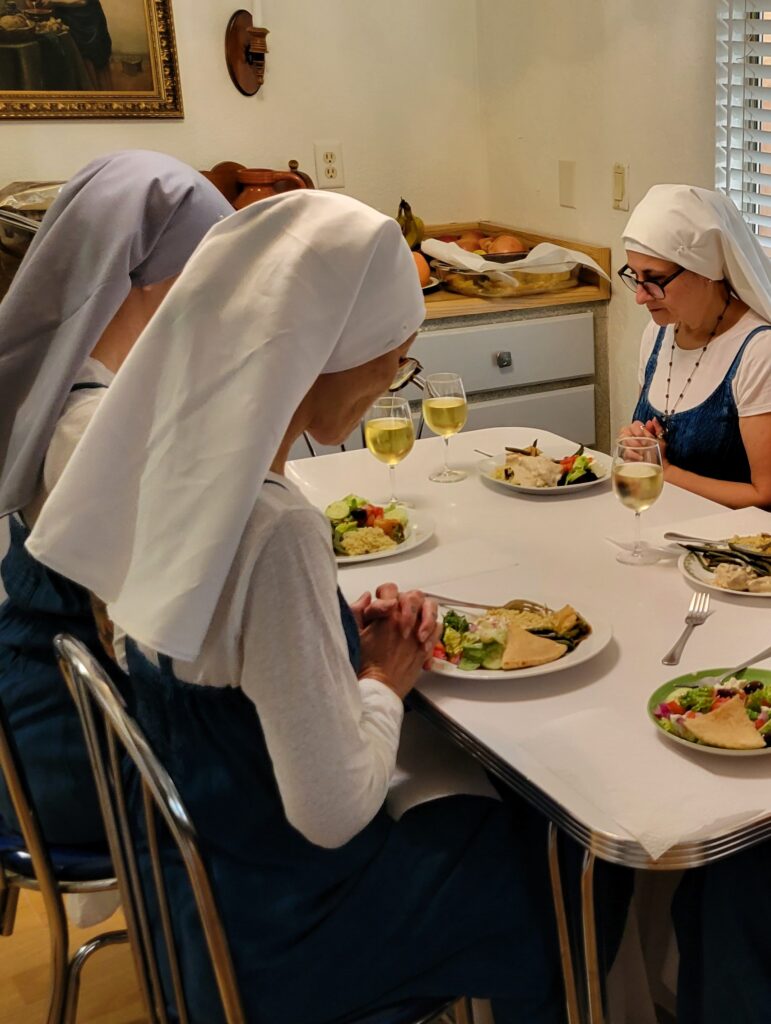
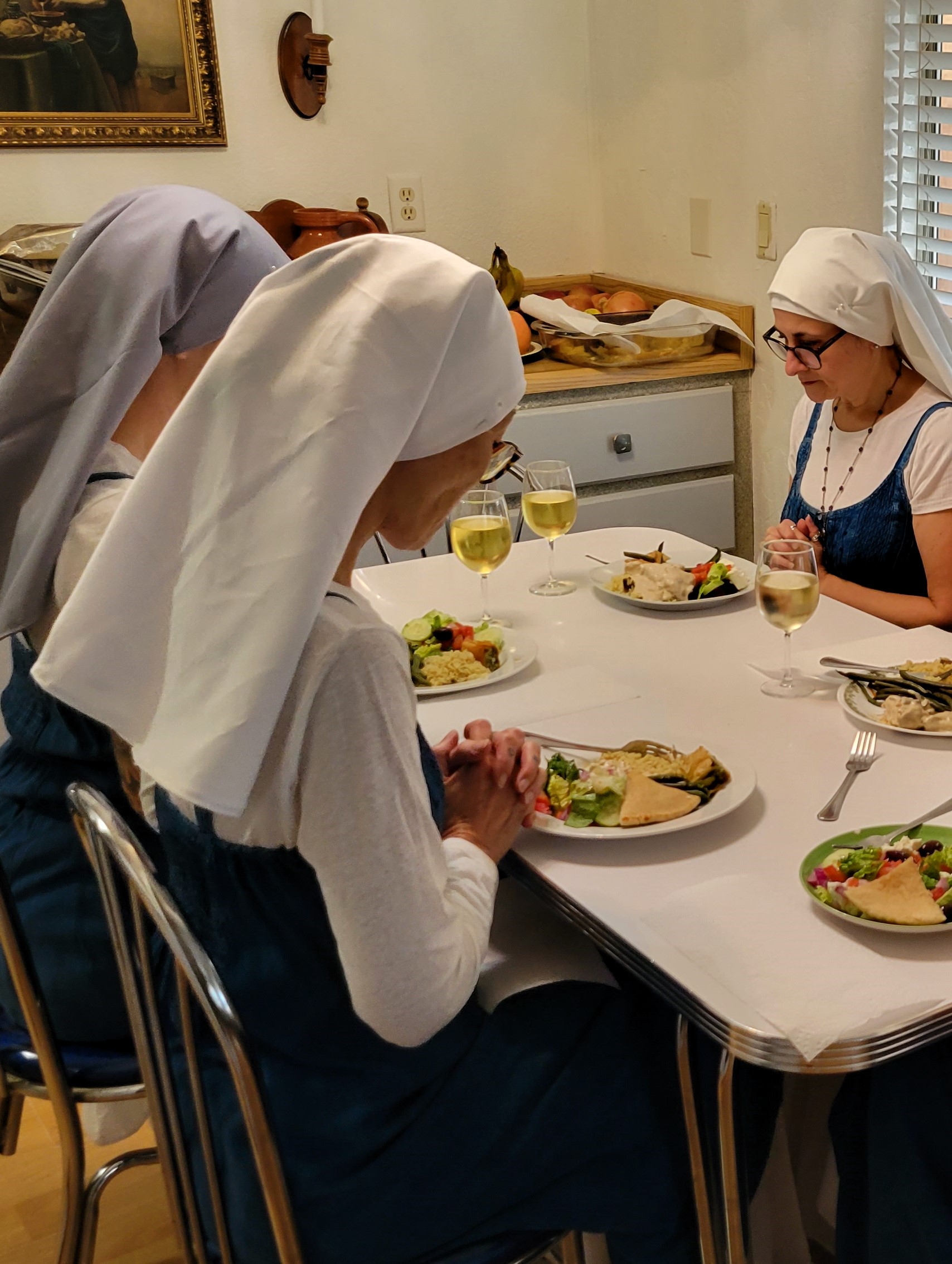
- Religions strongly encourage or require prescribed ritual activities for individuals and communities of faith . . . the Sisters say special blessings over and over, they take vows. Vows of Obedience, Chastity, Activism, Service, Ecology, and Simple Living.
- Religions commonly practice a moral or ethical code. The sisters of the valley wear their habits to show their spiritual side, while honoring their Beguine Mother’s values.
- Religious life necessitates spreading a message and the Sisters have a message to spread. They communicate their ecofeminist values to others, via their website, blog, community events, and even through protests.
- Religions both encourage communication and provide ways to connect with the divine.
The nuns, although they do not identify themselves as religious, offer a spiritual framework for others to pray, chant, and experience a divine reality. Through prayer and meditation, the women connect with the Mother Goddess/Father God. Through sacred stories, religions provide a coherent worldview. It is undeniable that the sisters have adopted stories about their Beguine Mothers, which have influenced them to serve in a similar community with similar values. Religions have religious functionaries and institutional structures. The Sisters of the Valley have created a matriarchy of women working with the plant, while the men are excluded from producing the sacred medicine.
6. Religions promise an inner peace and harmony. While the cannabis sisters have not explicitly promised an inner peace, it seemed obvious from speaking with them that each of them very much enjoyed being a part of the community and working together. Their passion for helping to heal other people was a major motivation in helping them make a suitable medicine.
Suffering and compassion are common themes. The Sisters of the Valley emulate compassion upon those suffering with cancer, epilepsy, and a variety of other painful illnesses. Their main goal is to remain compassionate and provide relief to those who need it.
Religions typically offer a new hope through the coming of a new age and the Sisters offer such a vision of a more harmonious life with each other and with Mother Earth.
Religions must propagate themselves with the recruitment of new members and procreation within the community of faith. This rings true to their community, as they continue to work hard to expand their numbers.