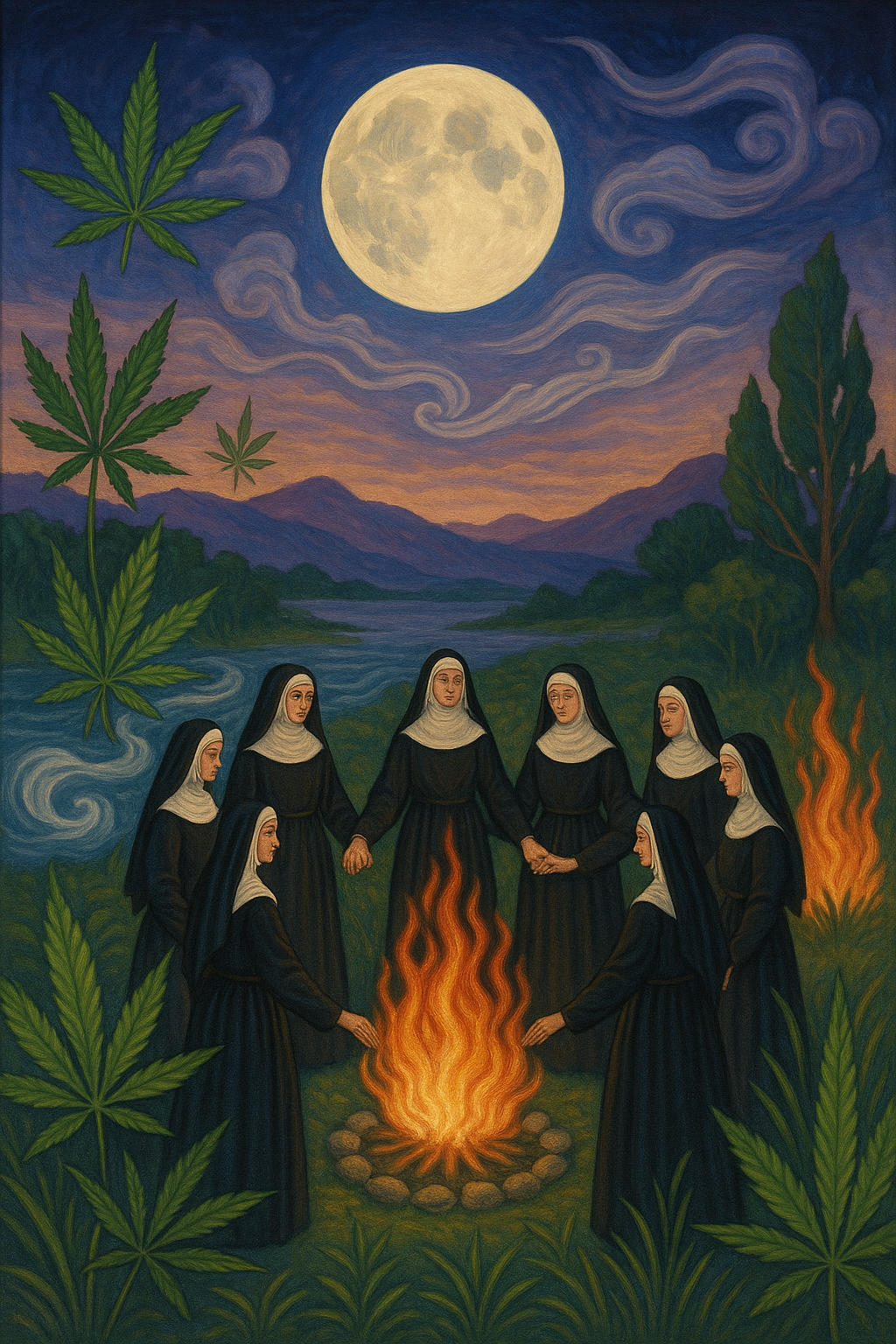
About the Beguines: The Beguines and the Beghards
A reading from the Wisdom of the Beguines. Pp 11-15; Quiet Moon Ceremony dedicated to reviewing and reaffirming core beliefs, Quiet Moon, March 2017
The Beguines were a phenomenal way of life that swept across Europe, yet they were never a religious order or a formalized movement. And they did not have one specific founder or rule to live by. There were common elements that rendered these women distinctive and familiar, including their common way of life, chastity and simplicity, their unusual business acumen, and their commitment to God and to the poor and marginalized. These women were essentially self-defined, in opposition to the many attempts to control and define them. They lived by themselves or together in so-called Bougienages, which could be single houses for as few as a handful of Beguines or, as in Brugge (Belgium), walled-in rows of houses enclosing a central court with a chapel where over a thousand Beguines might live — a village of women within a medieval town or city. And each region of Europe has its own Beguine stories to tell.
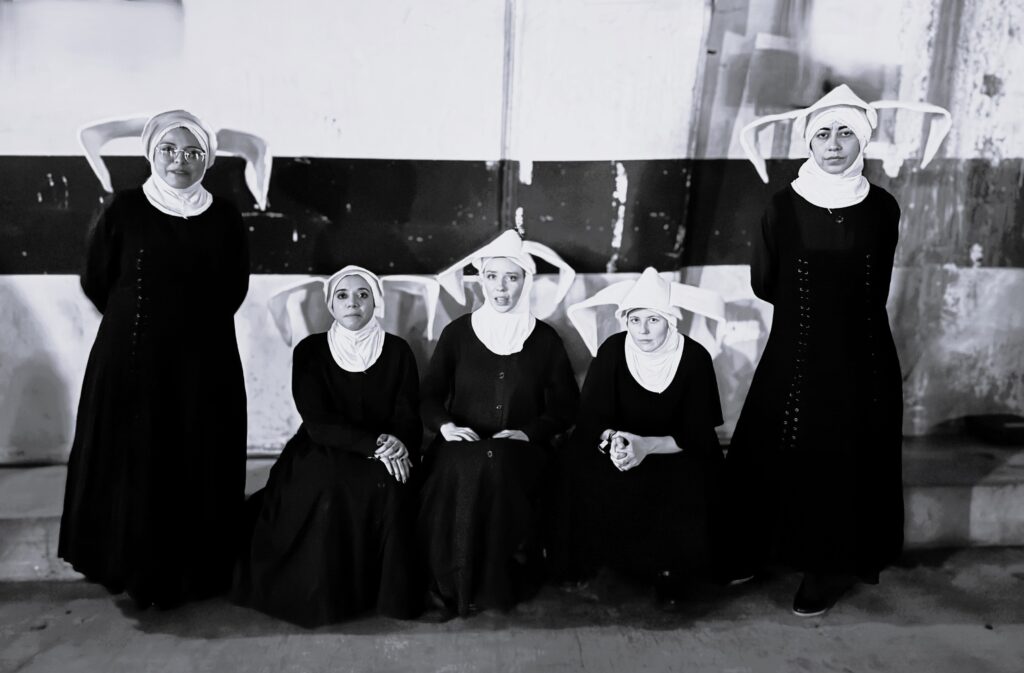
Some Beguines were suspected of heresy, and often politics were the driving force behind such charges. Certain clerics had to go undercover by joining a Benedictine or Cistercian monastery. Beguines had male counterparts called Beghards — but the Beghards quickly morphed into formal religious orders . . .
Women who were called “Beguines” were from every social class — aristocrats and patricians, merchants and guild members, widows or daughters of knights, the urban poor as well as rural poor. And Beguines could be of almost any age — from around fourteen years old up to their eighties and possibly beyond. Self-supporting and single or widowed, these women stood out for their spiritual and personal independence, preaching in public and debating with select theologians and biblical scholars. Many Beguines lived in private houses, home to just a few of them. Some spent part of their lives as hermits or recluses yet maintained some contact with their families, spiritual seekers, and other Beguines. Many lived alone while meeting daily with fellow Beguines in a favorite chapel or church for the celebration of mass, the Divine Office, and other gatherings for prayer.
Beguines encouraged fellow laypeople to follow their example and take responsibility for their own spiritual education. Beguines were passionate about ministry. They were astute in business, active in the emerging money economy, and committed to serving the less fortunate in various ways. These “gray women” — so named for their preferred attire of gray homespun wool with hooded capes — were given the nickname “Beguine” in the Low Countries — from the root begg-, meaning, to mumble or to speak unclearly, which was originally meant as a mocking term, suggesting these women were hypocritical or deceitfully pious.
Powerful medieval men were insulted by the presence of women living independent lifestyles and thus publicly derided them. How absurd were these women to think that they could live without the guidance of a father or husband or cleric? How could women be trusted with their own spiritual journey? Even teach and preach and handle their own money? Yet for many people the term “Beguine” soon became a compliment because these women had earned the respect and support of their fellow citizens, and even that of some political and religious leaders.
There was no single founder, no single specific constitutions, no formalized lifestyle for Beguines, yet this movement of extraordinary diversity had a significant impact on society and the church for centuries. Women began stepping outside the strictures and confines inflicted upon them by the church and the prevailing culture, seeking to express their faith as they felt called to it. They sought out preachers of their own choosing, secured informal copies of the Bible that existed in the vernacular and learned in texts, and began experimenting with ways of literally imitating the lives of the first apostles.
Frequently, Beguines gathered around a gifted female master teacher called a magistra (someone recognized as a Master of Theology) who was renowned for her eloquence and spiritual authority. Beguines forcefully embraced the call to holiness as every person’s journey and not just that of professional ‘holy people’, namely priests, monks, nuns, and others in formal religious life.
Throughout Europe, Beguines followed no formal rule of life such as the Rule of Benedict, and the local bishop exercised no more authority over the Beguines than he did over any other layperson in his diocese. Because Beguines paid taxes on their property and income, and their tax revenue was needed by the local government, they enjoyed a certain degree of protection from the church.
While some lived with their parents, many Beguines used their sources of income to purchase homes near the chapel or parish church where they gathered together for prayer. These homes became known as “convents” (which is the origin of the modern term), and they were shared by two to four — or, in larger homes, up to twelve — Beguines. They usually purchased homes near each other, slowly taking over neighborhoods. Sometimes these grew into larger complexes that became known in the Low Countries as court bougienages, because of a large bougienage’s central courtyard that all Beguines living there shared. Such courtyards functioned much like medieval village greens . . . and outer walls and gates provided the Beguines with privacy and security. Other court bougienages began as significant complexes on the edge of a city or large town, where a spacious tract of land was provided, and the Beguines began construction.